Showing posts with label Safety. Show all posts

March 14, 2022

Memba this? Concrete repairs finally rescheduled -- to commence on March 22, 2022

Precision Safe Sidewalks, LLC will be removing trip hazards on sidewalks and curbs throughout the cluster for approximately two days during the week of December 20, 2021 starting on March 22, 2022.  While the concrete cutting activity is quite loud, the cutting operator moves along relatively quickly and there is very little dust involved. The same process was recently performed with great effect on all of the Reston Association concrete sidewalks that traverse the cluster.  

Note: You might need to move your vehicle if it is parked immediately adjacent to a curb that will require cutting.  Scheduling is weather-dependent - we do not yet have an exact start date.  Stay tuned.

PRECISION SAFE SIDEWALKS REPAIR SPECIFICATIONS:


1. Three measurements were taken of every hazard:

  • Height1 -- the highest point of the hazard
  • Height2 -- the lowest point of the hazard
  • Length

2. Hazards will be removed from the full length of the panel (full edge-to-edge repair);

3. Sidewalks will be repaired at a slope of 1:8

4. Handicap ramps or special areas will be repaired at a slope of 1:12. Debris from repaired areas will be collected and removed

5. A dust abatement system will be used during all repair operations

6. The repaired area will be smooth and uniform with a coefficient of friction exceeding OSHA requirements for public walkways


202203141621
202112101347


March 29, 2019

Fairfax County PSA: Battery storage and disposal (March 2019)

Batteries 


So far this year, Fairfax County has experienced four battery-related fires.  In 2018, there were six fires caused by batteries.  As these numbers increase, so must awareness of the proper storage, recycling and disposal of all batteries.

STORAGE

Alkaline / single-use batteries (AA, AAA, 9V, C or D cell) should be stored using the following guidelines:
  • Keep in their original packaging
  • Store standing up
  • Use a battery storage container/organizer (designed to keep batteries secure/separate)
  • Never store batteries loose
  • Keep in dry storage area
  • Do not carry loose batteries in your pocket or purse
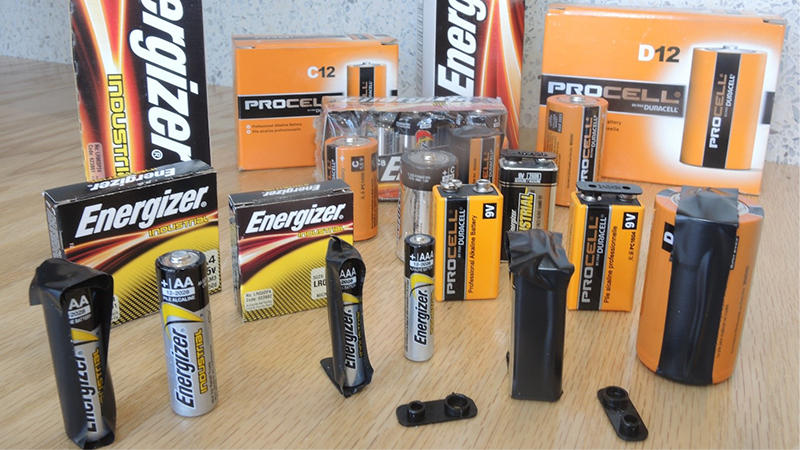
  • Cover terminal ends with electrical tape until ready to use
  • Do not toss batteries in a junk drawer with other metal objects

RECYCLING

There are four types of rechargeable batteries: lithium ion, nickel cadmium (ni-cad), nickel metal hydride and small sealed lead acid batteries (SSLA's under 2 lbs.)  These should never be thrown away, but instead recycled.  When damaged or exposed, these batteries pose a major fire hazard. 
Any rechargeable electronic device has a rechargeable battery.  Examples include laptop computers, remote control toys, portable power tools, video cameras, cell or cordless phones and walkie talkies.  After a certain number of uses, these batteries can no longer hold a charge and need to be recycled.
Additionally, damaged, defective and recalled batteries should be recycled.
Rechargeable batteries and any battery that has been damaged, deemed defective or recalled, can be recycled at one of the county's Household Hazardous Waste Collection Sites at I-66 Transfer Station and I-95 Landfill Complex.  Additional recycling resources include:
Batteries labeled with Alkaline that are single-use (AA, AAA, 9V, C, or D cell) do not need recycling.  Due to the Mercury-Containing and Rechargeable Battery Management Act passed in 1996 that phased out the use of mercury in alkaline batteries, single-use batteries are less of an issue when disposed in landfills.  However, all batteries could pose a potential fire hazard if under the right conditions.  Therefore, take the precautions listed in the next section for the proper disposal of single-use batteries.

DISPOSAL

When discarding Alkaline/single-use batteries (AA, AAA, 9V, C or D cell) in your household trash, follow one of these safety procedures before throwing them away to prevent an accidental fire.
  • Place a piece of electrical tape over both ends (+/-) of the battery.
  • Place batteries separately in a sealed plastic bag
  • Place batteries in their original packaging, sealed with tape.
Collection Sites